High Stakes, Human Heart
- Michael LaRocco
- Mar 28
- 2 min read

Updated: Jul 23
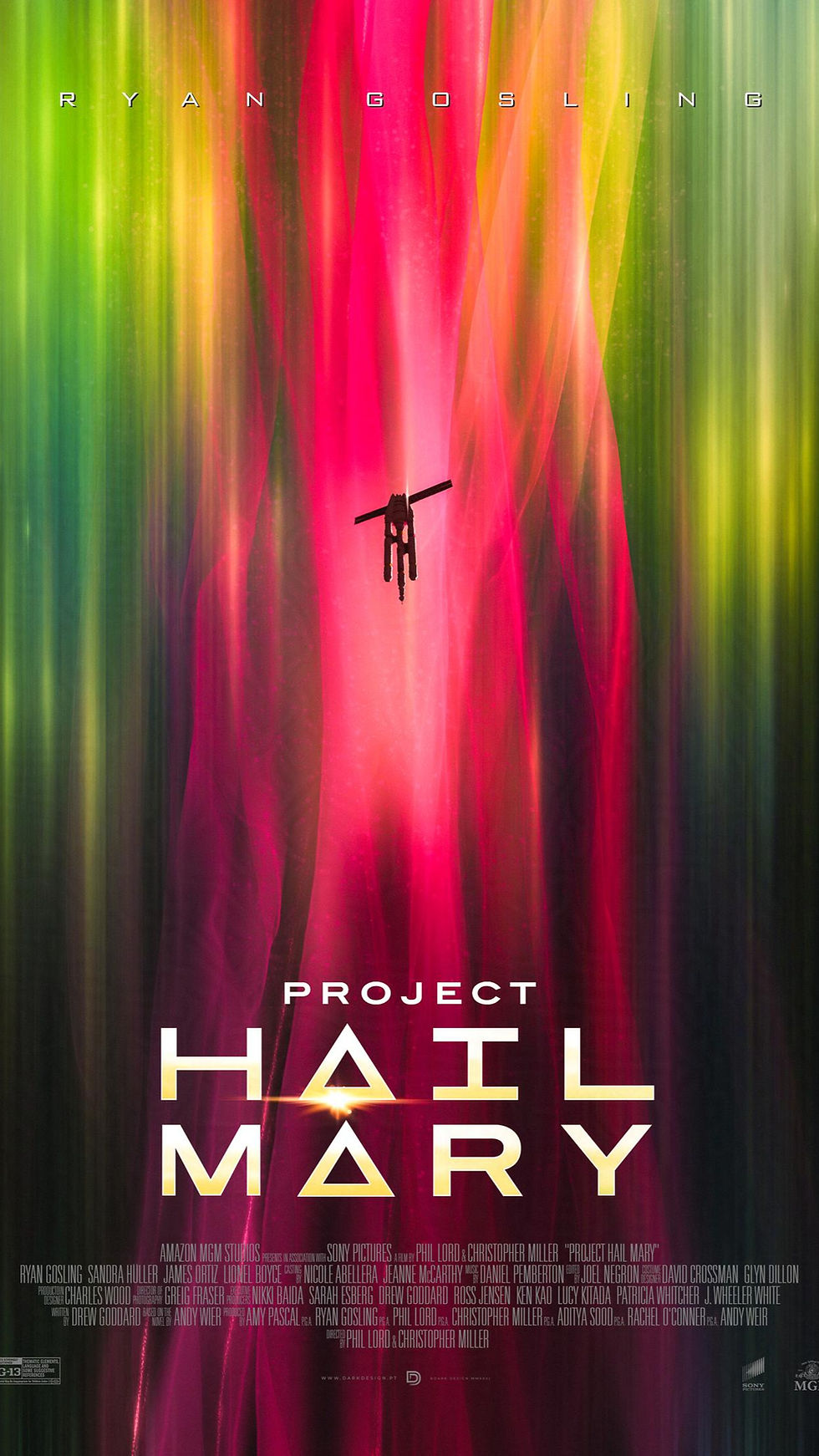
Project Hail Mary begins with Ryland Grace waking up alone on a spacecraft, disoriented and with no memory of who he is or why he’s there. As fragments of his past slowly return, he realizes he has been sent on a desperate mission to save Earth from an astronomical threat that could wipe out all life. What follows is part mystery, part survival story, and part first-contact adventure, centered on a reluctant hero trying to solve an impossible problem millions of miles from home.
Directed by Phil Lord and Christopher Miller, Project Hail Mary is a rare big-budget sci-fi film that balances breathtaking spectacle with genuine warmth and curiosity. Its visual scale is consistently impressive, but the film never mistakes spectacle for substance. Every dazzling set piece, weightless spacewalk, and cosmic revelation advances the story or deepens our understanding of its characters. The movie has a playful, charming tone that makes the science and high-stakes mission feel approachable, while still knowing when to lean into darker moments. One of the most striking scenes is when Eva essentially forces Ryland onto the suicide mission against his will, injecting a sharp moral ambiguity into what might otherwise feel like a straightforward adventure. That interplay between awe, humor, and genuine emotional stakes keeps the film engaging throughout.
Naturally, a great many details from Andy Weir’s novel were left out, but most of those omissions feel understandable within the constraints of a feature-length adaptation. Some of the book’s stranger or more elaborate ideas, such as the proposal to nuke Antarctica in a desperate attempt to slow the crisis, would likely have complicated the pacing or distracted from the central narrative. Instead, the film narrows its focus to the mission itself and the relationships that give it emotional weight, allowing the story to move briskly while remaining true to the novel’s spirit.
In that sense, the film succeeds not by reproducing every plot point from the book but by preserving what made it memorable in the first place: its curiosity, optimism, and joy of discovery. I rarely find myself completely won over by what I’d call a popcorn movie, yet Project Hail Mary held my attention from beginning to end. It delivers the thrills audiences expect from a summer blockbuster while never losing sight of the humanity at its core, proving that spectacle is most effective when it inspires wonder rather than simply overwhelming the senses.


Comments